
About EMDR Therapy: How Eye Movement Desensitization and Reprocessing Works

EMDR (Eye Movement Desensitization and Reprocessing) is evidence-based therapy designed to help people process trauma from stressful past experiences.
Unlike traditional talk therapy that focuses primarily on discussing experiences, EMDR uses bilateral stimulation of the brain (usually through directed eye movements, tactile buzzes or tapping) to neutralize difficult memories.
The goal of treatment is to lessen the vividness of memories so the events in your life will no longer trigger you to recall overwhelming emotions.
What is EMDR Therapy?
EMDR therapy is a psychotherapy approach developed by Dr. Francine Shapiro in the late 1980s to help people heal from traumatic memories. Dr. Shapiro founded the EMDR Institute to teach practitioners how to utilize this groundbreaking treatment method across the world.

EMDR was founded on the premise that some traumatic past experiences become stored in the brain in a way that continues to trigger distress in a person’s life. While the person understands that the trauma happened in the past, their nervous system may still respond as if the event is happening in the present moment.
EMDR helps clients access these memories in a safe, structured way while using bilateral stimulation techniques, such as guided eye movements or other forms of left-to-right stimulation. This process supports the brain’s natural ability to process and let go of these difficult experiences.
What Is Bilateral Stimulation in EMDR Therapy?
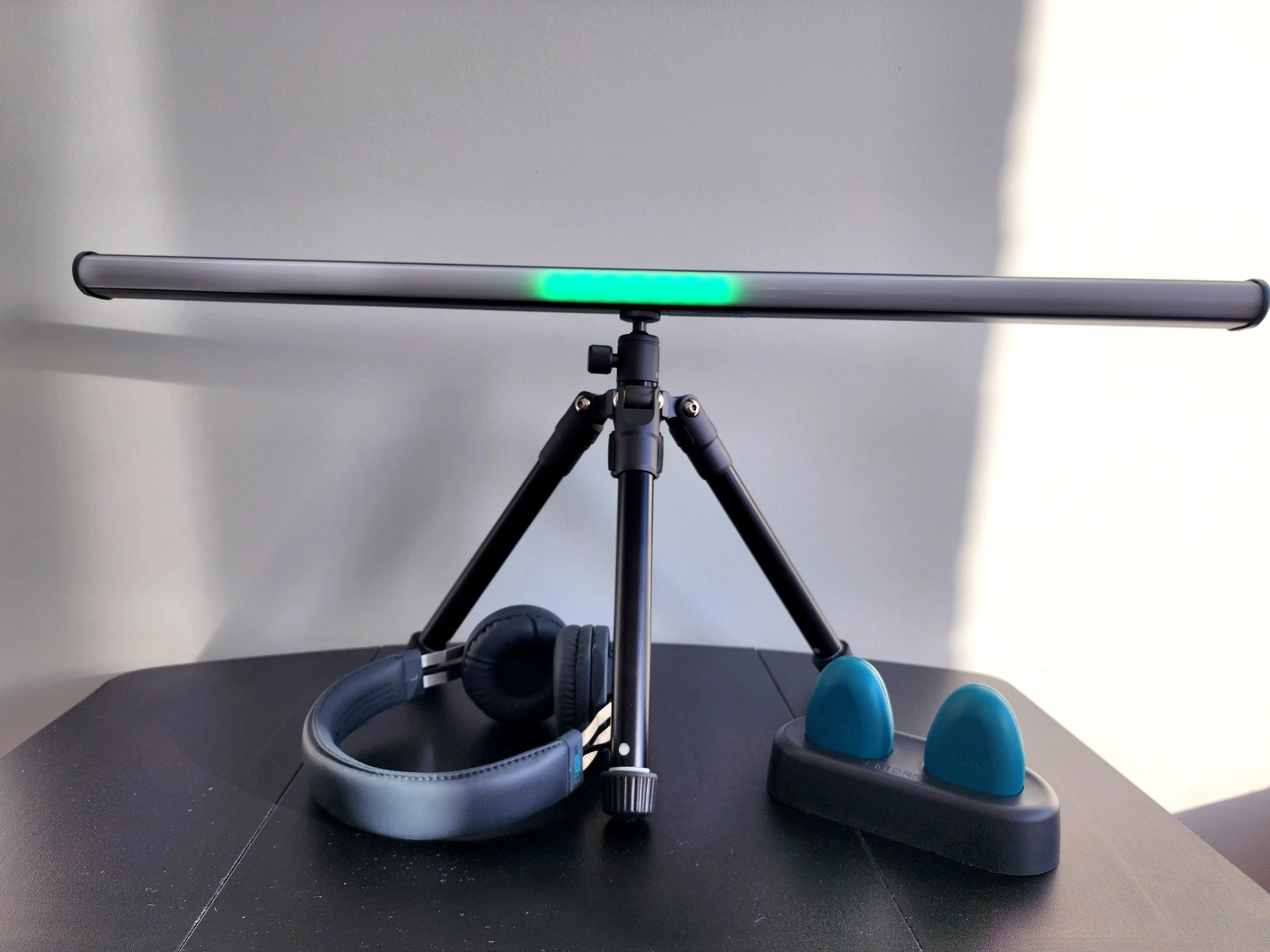
Bilateral stimulation is a key component of EMDR therapy that involves engaging both sides of the brain through alternating sensory input. During EMDR sessions, this may involve guided eye movements, tapping, sounds, or other forms of left-to-right stimulation.
The purpose of bilateral stimulation is to support the brain’s natural processing system while you focus on a specific experience or emotion. Many people find that this process helps memories feel less overwhelming and allows them to develop new perspectives about past experiences.
How Does EMDR Therapy Work?
EMDR therapy follows a structured eight-phase process that helps clients safely identify and process distressing experiences.
-
You and your therapist will discuss your history and goals to determine what events may be connected to your symptoms. Based on your needs, your therapist will put together a unique treatment plan.
-
Before processing difficult memories, your therapist will help you develop grounding skills and strategies to feel safe and supported during sessions.
-
Together, you and your therapist will identify specific memories, emotions, beliefs, or body sensations connected to the distress you are experiencing.
-
During EMDR processing, your therapist will guide you through recalling aspects of your memories while using bilateral stimulation.
-
EMDR therapy will help you strengthen healthier beliefs and perspectives, such as feeling capable and in control.
-
Your therapist will help you notice and process any remaining physical responses connected to your distressing memories.
-
Sessions will end with grounding and emotional regulation techniques to help you leave feeling stable and safe.
-
Your therapist will review your progress and determine what areas, if any, you should continue to work on.
Schedule your first EMDR therapy appointment

What Can EMDR Therapy Help With?
Although EMDR was originally developed to treat trauma and PTSD, research and clinical practice have shown that EMDR can be helpful for many experiences that create emotional distress.

EMDR may help people working through:
PTSD or traumatic experiences
Childhood trauma
Anxiety and panic
High-stress experiences or occupations
Grief and loss
Medical trauma
Relationship trauma
Life transitions that feel overwhelming
EMDR Research
EMDR therapy is one of the most extensively researched treatments for trauma, with decades of clinical studies demonstrating its effectiveness. For more information, we’ve compiled a selection of research that highlights how EMDR helps people heal more efficiently and completely.

-
Meta-Analysis of Psychological Treatments (Gold Standard Evidence)
Bisson, J. I., Ehlers, A., Matthews, R., Pilling, S., Richards, D., & Turner, S. (2007). Psychological therapies for chronic post-traumatic stress disorder: Systematic review and meta-analysis. The British Journal of Psychiatry, 190(2), 97–104. https://doi.org/10.1192/bjp.bp.106.021402
EMDR is one of the most effective first-line treatments for PTSD, producing large and sustained reductions in symptoms comparable to trauma-focused CBT.Cochrane Review (High-Level Evidence)
Bisson, J. I., Roberts, N. P., Andrew, M., Cooper, R., & Lewis, C. (2013). Psychological therapies for chronic post-traumatic stress disorder (PTSD) in adults. Cochrane Database of Systematic Reviews, (12). https://doi.org/10.1002/14651858.CD003388.pub4
EMDR demonstrates large effect sizes in reducing PTSD symptoms and is strongly supported as a frontline treatment in high-quality randomized trials.Meta-Analysis of EMDR RCTs
Chen, Y.-R., Hung, K.-W., Tsai, J.-C., Chu, H., Chung, M.-H., Chen, S.-R., Liao, Y.-M., Ou, K.-L., Chang, Y.-C., & Chou, K.-R. (2014). Efficacy of eye-movement desensitization and reprocessing for patients with posttraumatic stress disorder: A meta-analysis of randomized controlled trials. PLOS ONE, 9(8), e103676. https://doi.org/10.1371/journal.pone.0103676
Across randomized trials, EMDR consistently reduces PTSD symptoms, anxiety, depression, and distress with moderate to large effect sizes.HMO Controlled Study (Speed + Efficiency)
Marcus, S. V., Marquis, P., & Sakai, C. (1997). Controlled study of treatment of PTSD using EMDR in an HMO setting. Psychotherapy: Theory, Research, Practice, Training, 34(3), 307–315. https://doi.org/10.1037/h0087791
EMDR produced faster and greater reductions in PTSD symptoms than standard care, while requiring fewer therapy sessions.Military PTSD Study
Köhler, K., Eggert, P., Lorenz, S., Herr, K., Willmund, G., Zimmermann, P., & Alliger-Horn, C. (2017). Effectiveness of eye movement desensitization and reprocessing in German armed forces soldiers with post-traumatic stress disorder under routine inpatient care conditions. Military Medicine, 182(5–6), e1672–e1680. https://doi.org/10.7205/MILMED-D-16-00307
EMDR led to moderate-to-large reductions in PTSD symptoms in military populations, even in complex trauma contexts.Children PTSD (Motor Vehicle Accidents)
Kemp, M., Drummond, P., & McDermott, B. (2010). A wait-list controlled pilot study of eye movement desensitization and reprocessing (EMDR) for children with post-traumatic stress disorder (PTSD) symptoms from motor vehicle accidents. Clinical Child Psychology and Psychiatry. https://doi.org/10.1177/1359104509339086
After just four EMDR sessions, only 25% of children still met PTSD criteria compared to 100% in the waitlist group, with results maintained at 12 months.PTSD vs Exposure (Mechanism + Intrusions)
Lee, C., Gavriel, H., Drummond, P., Richards, J., & Greenwald, R. (2002). Treatment of PTSD: Stress inoculation training with prolonged exposure compared to EMDR. Journal of Clinical Psychology. https://doi.org/10.1002/jclp.10039
EMDR produced greater reductions in intrusive symptoms and continued improvement after treatment compared to exposure-based therapy.Faster Symptom Reduction vs CBT-Type Therapy
Nijdam, M. J., Gersons, B. P. R., Reitsma, J. B., de Jongh, A., & Olff, M. (2012). Brief eclectic psychotherapy v. eye movement desensitisation and reprocessing therapy for post-traumatic stress disorder: Randomised controlled trial. The British Journal of Psychiatry. https://doi.org/10.1192/bjp.bp.111.099234
EMDR produced faster symptom reduction than trauma-focused CBT, while achieving similar final outcomes.Refugee RCT (Severe Trauma Context)
Acarturk, C., Konuk, E., Cetinkaya, M., Senay, I., Sijbrandij, M., Cuijpers, P., & Aker, T. (2016). The efficacy of eye movement desensitization and reprocessing for post-traumatic stress disorder and depression among Syrian refugees: Results of a randomized controlled trial. Psychological Medicine. https://doi.org/10.1017/S0033291716001070
EMDR significantly reduced PTSD symptoms in highly traumatized refugee populations, with large effect sizes and sustained improvement. -
Meta-Analysis (PTSD + Anxiety Outcomes)
Chen, Y.-R., Hung, K.-W., Tsai, J.-C., Chu, H., Chung, M.-H., Chen, S.-R., Liao, Y.-M., Ou, K.-L., Chang, Y.-C., & Chou, K.-R. (2014). Efficacy of eye-movement desensitization and reprocessing for patients with posttraumatic stress disorder: A meta-analysis of randomized controlled trials. PLOS ONE, 9(8), e103676. https://doi.org/10.1371/journal.pone.0103676
EMDR produced moderate reductions in anxiety symptoms across randomized controlled trials of trauma-affected populations.HMO Controlled Study (Anxiety Outcomes)
Marcus, S. V., Marquis, P., & Sakai, C. (1997). Controlled study of treatment of PTSD using EMDR in an HMO setting. Psychotherapy: Theory, Research, Practice, Training, 34(3), 307–315. https://doi.org/10.1037/h0087791
EMDR significantly reduced anxiety symptoms more rapidly and effectively than standard care in individuals with PTSD.Pediatric Medical Trauma Study (Anxiety/Phobia)
Meentken, M. G., van der Mheen, M., van Beynum, I. M., Aendekerk, E. W. C., Legerstee, J. S., van der Ende, J., Del Canho, R., Lindauer, R. J. L., Hillegers, M. H. J., Moll, H. A., Helbing, W. A., & Utens, E. M. W. J. (2019). EMDR for children with medically related subthreshold PTSD: Short-term effects on PTSD, blood-injection-injury phobia, depression and sleep. European Journal of Psychotraumatology. https://doi.org/10.1080/20008198.2019.1705598
EMDR led to greater reductions in anxiety-related symptoms (including phobias) compared to standard care in children.Rheumatoid Arthritis Pain Study (Anxiety-Related Distress)
Ghanbari Nia, N., Afrasiabifar, A., & Behnammoghadam, M. (2018). Comparing the effect of eye movement desensitization and reprocessing (EMDR) with guided imagery on pain severity in patients with rheumatoid arthritis. Journal of Inflammation Research. https://doi.org/10.2147/JIR.S174408
EMDR significantly reduced emotional distress and anxiety associated with chronic pain more than guided imagery or standard care.Syrian Refugee RCT (Anxiety + General Distress)
Acarturk, C., Konuk, E., Cetinkaya, M., Senay, I., Sijbrandij, M., Cuijpers, P., & Aker, T. (2016). The efficacy of eye movement desensitization and reprocessing for post-traumatic stress disorder and depression among Syrian refugees: Results of a randomized controlled trial. Psychological Medicine. https://doi.org/10.1017/S0033291716001070
EMDR significantly reduced anxiety and general psychological distress in refugees compared to waitlist controls, with sustained improvements.Virtual / Self-Guided EMDR Pilot (Anxiety Reduction)
Goga, N., Boiangiu, C.-A., Vasilateanu, A., Popovici, A.-F., Drăgoi, M.-V., Popovici, R., Gancea, I. O., Pîrlog, M. C., & Popa, R. C. (Year not listed). An efficient system for eye movement desensitization and reprocessing (EMDR) therapy: A pilot study.
A single session of EMDR delivered via a virtual system significantly reduced anxiety and distress related to traumatic memories. -
Meta-Analysis (Depression as Primary Outcome)
Carletto, S., Malandrone, F., Berchialla, P., Oliva, F., Colombi, N., & Hase, M. (Year not listed). Eye movement desensitization and reprocessing for depression: A systematic review and meta-analysis.
Across multiple studies, EMDR produced large reductions in depressive symptoms, with effect sizes comparable to or exceeding many established therapies.Meta-Analysis of EMDR RCTs (Depression Outcomes)
Chen, Y.-R., Hung, K.-W., Tsai, J.-C., Chu, H., Chung, M.-H., Chen, S.-R., Liao, Y.-M., Ou, K.-L., Chang, Y.-C., & Chou, K.-R. (2014). Efficacy of eye-movement desensitization and reprocessing for patients with posttraumatic stress disorder: A meta-analysis of randomized controlled trials. PLOS ONE, 9(8), e103676. https://doi.org/10.1371/journal.pone.0103676
EMDR consistently reduced depression symptoms across randomized trials involving trauma-affected populations.Military PTSD Study (Depression Outcomes)
Köhler, K., Eggert, P., Lorenz, S., Herr, K., Willmund, G., Zimmermann, P., & Alliger-Horn, C. (2017). Effectiveness of eye movement desensitization and reprocessing in German armed forces soldiers with post-traumatic stress disorder under routine inpatient care conditions. Military Medicine, 182(5–6), e1672–e1680. https://doi.org/10.7205/MILMED-D-16-00307
EMDR produced large improvements in depressive symptoms in military populations alongside reductions in PTSD.HMO Controlled Study (Depression + Speed of Improvement)
Marcus, S. V., Marquis, P., & Sakai, C. (1997). Controlled study of treatment of PTSD using EMDR in an HMO setting. Psychotherapy: Theory, Research, Practice, Training, 34(3), 307–315. https://doi.org/10.1037/h0087791
EMDR significantly reduced depression symptoms more quickly and effectively than standard care.Pediatric Medical Trauma Study (Depression Outcomes)
Meentken, M. G., van der Mheen, M., van Beynum, I. M., Aendekerk, E. W. C., Legerstee, J. S., van der Ende, J., Del Canho, R., Lindauer, R. J. L., Hillegers, M. H. J., Moll, H. A., Helbing, W. A., & Utens, E. M. W. J. (2019). EMDR for children with medically related subthreshold PTSD: Short-term effects on PTSD, blood-injection-injury phobia, depression and sleep. European Journal of Psychotraumatology. https://doi.org/10.1080/20008198.2019.1705598
EMDR led to greater reductions in depressive symptoms compared to standard care in children following medical trauma.Refugee RCT (Depression + Trauma)
Acarturk, C., Konuk, E., Cetinkaya, M., Senay, I., Sijbrandij, M., Cuijpers, P., & Aker, T. (2016). The efficacy of eye movement desensitization and reprocessing for post-traumatic stress disorder and depression among Syrian refugees: Results of a randomized controlled trial. Psychological Medicine. https://doi.org/10.1017/S0033291716001070
EMDR significantly reduced depression symptoms in refugee populations, with improvements maintained after treatment.Early EMDR Intervention (Depression Secondary Outcome)
Shapiro, E., & Laub, B. (2015). Early EMDR intervention following a community critical incident: A randomized clinical trial. Journal of EMDR Practice and Research, 9(1). https://doi.org/10.1891/1933-3196.9.1.17
Brief EMDR intervention following trauma was associated with reductions in depressive symptoms alongside improvements in posttraumatic stress. -
General Medical / Somatic Symptoms (Includes Dermatologic Conditions)
Shapiro, F. (2014). The role of eye movement desensitization and reprocessing (EMDR) therapy in medicine: Addressing the psychological and physical symptoms stemming from adverse life experiences. The Permanente Journal, 18(1), 71–77. https://doi.org/10.7812/TPP/13-098
EMDR has been associated with improvements in physical conditions—including dermatologic symptoms—by processing underlying distressing experiences linked to symptom expression.Chronic Pain / Somatic Distress Study (Mechanism Overlap with Skin Conditions)
Ghanbari Nia, N., Afrasiabifar, A., & Behnammoghadam, M. (2018). Comparing the effect of eye movement desensitization and reprocessing (EMDR) with guided imagery on pain severity in patients with rheumatoid arthritis. Journal of Inflammation Research. https://doi.org/10.2147/JIR.S174408
EMDR significantly reduced somatic distress and pain, suggesting that processing stored distressing experiences can alleviate physical symptoms mediated by the nervous system. -
Childhood Sexual Abuse (Protocol + Prior Evidence Summary)
Molero-Zafra, M., Mitjans-Lafont, M. T., Hernández-Jiménez, M. J., & Pérez-Marín, M. (Year not listed). Psychological intervention in women victims of childhood sexual abuse: An open study-protocol of a randomized controlled clinical trial comparing EMDR psychotherapy and trauma-based cognitive therapy.
Prior research summarized in this study indicates EMDR produces reductions in PTSD and anxiety symptoms in survivors of childhood sexual abuse, with outcomes comparable or slightly stronger than CBT.Meta-Analysis of PTSD Treatments (Includes Sexual Trauma Populations)
Bisson, J. I., Ehlers, A., Matthews, R., Pilling, S., Richards, D., & Turner, S. (2007). Psychological therapies for chronic post-traumatic stress disorder: Systematic review and meta-analysis. The British Journal of Psychiatry, 190(2), 97–104. https://doi.org/10.1192/bjp.bp.106.021402
EMDR is a first-line treatment for PTSD across trauma types—including sexual assault—producing large and sustained symptom reductions.Cochrane Review (High-Level Evidence Across Trauma Types)
Bisson, J. I., Roberts, N. P., Andrew, M., Cooper, R., & Lewis, C. (2013). Psychological therapies for chronic post-traumatic stress disorder (PTSD) in adults. Cochrane Database of Systematic Reviews, (12). https://doi.org/10.1002/14651858.CD003388.pub4
EMDR demonstrates strong evidence for reducing PTSD symptoms across diverse trauma populations, including survivors of sexual violence. -
Motor Vehicle Trauma (Children RCT)
Kemp, M., Drummond, P., & McDermott, B. (2010). A wait-list controlled pilot study of eye movement desensitization and reprocessing (EMDR) for children with post-traumatic stress disorder (PTSD) symptoms from motor vehicle accidents. Clinical Child Psychology and Psychiatry. https://doi.org/10.1177/1359104509339086
After just four EMDR sessions, most children no longer met PTSD criteria, with improvements maintained up to 12 months.Medical Trauma / Phobia / Depression (Children RCT)
Meentken, M. G., van der Mheen, M., van Beynum, I. M., Aendekerk, E. W. C., Legerstee, J. S., van der Ende, J., Del Canho, R., Lindauer, R. J. L., Hillegers, M. H. J., Moll, H. A., Helbing, W. A., & Utens, E. M. W. J. (2019). EMDR for children with medically related subthreshold PTSD: Short-term effects on PTSD, blood-injection-injury phobia, depression and sleep. European Journal of Psychotraumatology. https://doi.org/10.1080/20008198.2019.1705598
EMDR improved depression, phobia symptoms, and sleep in children, with outcomes comparable to standard care for PTSD symptoms.Meta-Analysis of Youth Trauma Treatments
Gillies, D., Taylor, F., Gray, C., O’Brien, L., & D’Abrew, N. (2016). Psychological therapies for children and adolescents with post-traumatic stress disorder: A meta-analysis and systematic review. Psychological Medicine, 47(11), 1893–1905.
EMDR is an effective treatment for trauma in children and adolescents, showing significant symptom improvement comparable to CBT and other leading therapies.Systematic Review – EMDR in Children & Adolescents
Adler-Tapia, R., & Settle, C. (2009). Evidence of the efficacy of EMDR with children and adolescents in individual psychotherapy: A review of the research published in peer-reviewed journals. Journal of EMDR Practice and Research, 3(4), 232–247. https://doi.org/10.1891/1933-3196.3.4.232
Across studies, EMDR consistently reduces trauma symptoms, anxiety, and behavioral difficulties in children, often in a relatively small number of sessions.EMDR Group Protocol for Youth (Cancer / Ongoing Trauma)
Osorio, A., Pérez, M. C., Tirado, S. G., Jarero, I., & Givaudan, M. (Year not listed). Randomized controlled trial on the EMDR integrative group treatment protocol for ongoing traumatic stress with adolescents and young adults patients with cancer. American Journal of Applied Psychology, 7(4).
A brief, intensive EMDR group protocol significantly reduced PTSD, anxiety, and depression in adolescents facing ongoing medical trauma. -
EMDR Intensive Group Protocol (Cancer / Ongoing Trauma)
Osorio, A., Pérez, M. C., Tirado, S. G., Jarero, I., & Givaudan, M. (Year not listed). Randomized controlled trial on the EMDR integrative group treatment protocol for ongoing traumatic stress with adolescents and young adults patients with cancer. American Journal of Applied Psychology, 7(4).
A brief, intensive EMDR group intervention delivered over two days significantly reduced PTSD, anxiety, and depression, with continued improvement at follow-up.Early EMDR Intervention (Condensed Timeline)
Shapiro, E., & Laub, B. (2015). Early EMDR intervention following a community critical incident: A randomized clinical trial. Journal of EMDR Practice and Research, 9(1). https://doi.org/10.1891/1933-3196.9.1.17
EMDR delivered over a short, concentrated timeframe produced rapid reductions in posttraumatic stress symptoms compared to waitlist controls.HMO Controlled Study (Efficiency / Fewer Sessions)
Marcus, S. V., Marquis, P., & Sakai, C. (1997). Controlled study of treatment of PTSD using EMDR in an HMO setting. Psychotherapy: Theory, Research, Practice, Training, 34(3), 307–315. https://doi.org/10.1037/h0087791
EMDR achieved faster symptom reduction with fewer sessions than standard care, supporting its efficiency and suitability for accelerated treatment formats.Children PTSD Study (Brief Treatment)
Kemp, M., Drummond, P., & McDermott, B. (2010). A wait-list controlled pilot study of eye movement desensitization and reprocessing (EMDR) for children with post-traumatic stress disorder (PTSD) symptoms from motor vehicle accidents. Clinical Child Psychology and Psychiatry. https://doi.org/10.1177/1359104509339086
Significant PTSD symptom reduction occurred in as few as four EMDR sessions, with lasting results up to one year.Meta-Analysis (Efficiency vs Traditional Therapy)
Nijdam, M. J., Gersons, B. P. R., Reitsma, J. B., de Jongh, A., & Olff, M. (2012). Brief eclectic psychotherapy v. eye movement desensitisation and reprocessing therapy for post-traumatic stress disorder: Randomised controlled trial. The British Journal of Psychiatry. https://doi.org/10.1192/bjp.bp.111.099234
EMDR produced faster symptom reduction than trauma-focused CBT, even though both reached similar outcomes by the end of treatment.EMDR Theory + Clinical Evidence (Speed of Change)
Shapiro, F. (2014). The role of eye movement desensitization and reprocessing (EMDR) therapy in medicine: Addressing the psychological and physical symptoms stemming from adverse life experiences. The Permanente Journal, 18(1), 71–77. https://doi.org/10.7812/TPP/13-098
Research and clinical data show many individuals experience substantial symptom relief from EMDR in a small number of sessions, sometimes within 3–6 sessions. -
German Armed Forces Study (Real-World Clinical Setting)
Köhler, K., Eggert, P., Lorenz, S., Herr, K., Willmund, G., Zimmermann, P., & Alliger-Horn, C. (2017). Effectiveness of eye movement desensitization and reprocessing in German armed forces soldiers with post-traumatic stress disorder under routine inpatient care conditions. Military Medicine, 182(5–6), e1672–e1680. https://doi.org/10.7205/MILMED-D-16-00307
EMDR produced moderate to large reductions in PTSD and depression symptoms in active-duty soldiers receiving inpatient care.Meta-Analysis of PTSD Psychotherapies (Includes Veterans Populations)
Bradley, R., Greene, J., Russ, E., Dutra, L., & Westen, D. (2005). A multidimensional meta-analysis of psychotherapy for PTSD. American Journal of Psychiatry, 162(2), 214–227. https://doi.org/10.1176/appi.ajp.162.2.214
Across studies including military populations, EMDR is associated with high rates of symptom improvement and recovery in PTSD.Meta-Analysis of EMDR RCTs
Chen, Y.-R., Hung, K.-W., Tsai, J.-C., Chu, H., Chung, M.-H., Chen, S.-R., Liao, Y.-M., Ou, K.-L., Chang, Y.-C., & Chou, K.-R. (2014). Efficacy of eye-movement desensitization and reprocessing for patients with posttraumatic stress disorder: A meta-analysis of randomized controlled trials. PLOS ONE, 9(8), e103676. https://doi.org/10.1371/journal.pone.0103676
EMDR consistently reduces PTSD, anxiety, and depression across trauma populations, including combat-related trauma.Early Intervention After Mass Trauma (Relevant to Combat/Deployment Contexts)
Shapiro, E., & Laub, B. (2015). Early EMDR intervention following a community critical incident: A randomized clinical trial. Journal of EMDR Practice and Research, 9(1). https://doi.org/10.1891/1933-3196.9.1.17
Brief EMDR interventions delivered shortly after traumatic events significantly reduced posttraumatic stress symptoms and supported recovery.